“This is the official website of the Consortium to utilize the SoftBank original reference sites for Earth and Space Science (CSESS*).”
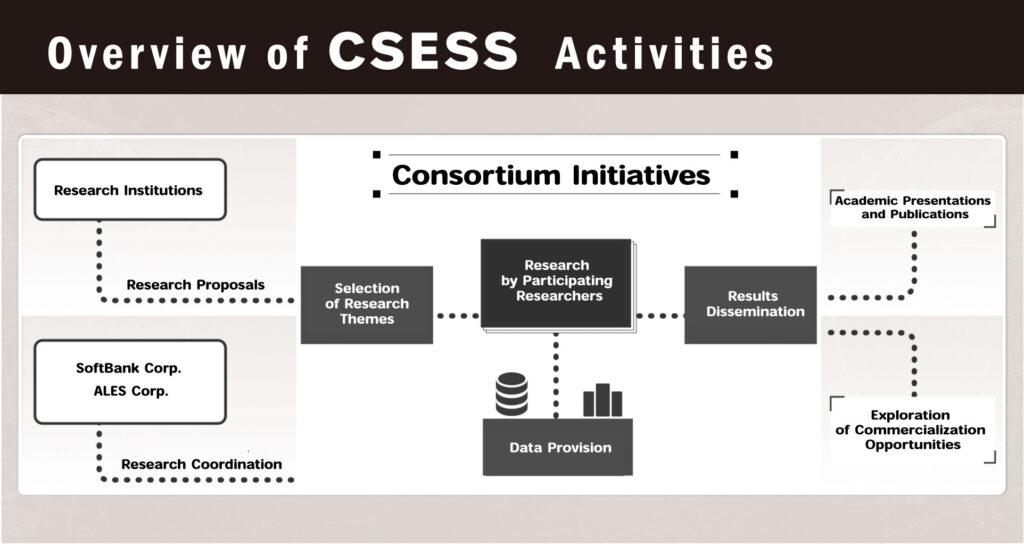
The Graduate School of Science, Tohoku University, in cooperation with SoftBank Corp. and ALES Corp., established the Consortium to utilize the SoftBank original reference sites for Earth and Space Science (CSESS), which involves multiple research institutions.
This consortium aims to promote the commercialization of research outcomes in Earth science and the creation of new Earth science by utilizing data from the high-density GNSS observation network (SoftBank original reference sites) operated by SoftBank.
The core activities focus on verifying methods for data utilization across a wide range of Earth science fields, including earthquakes and the troposphere, and are expected to make significant contributions to natural disaster prediction and disaster prevention and mitigation. SoftBank and ALES plan to pursue commercialization and propose disaster prevention and mitigation measures based on the research outcomes. In addition, the consortium will advance research in fields such as earthquakes, volcanic activity, the troposphere, and the ionosphere.
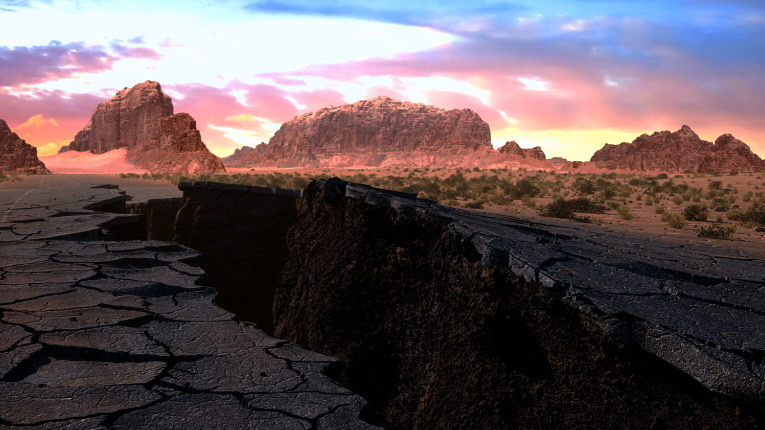
Earthquake-related research
High-accuracy characterization of earthquake-related crustal deformation and its physical mechanisms; long-term earthquake forecasting.
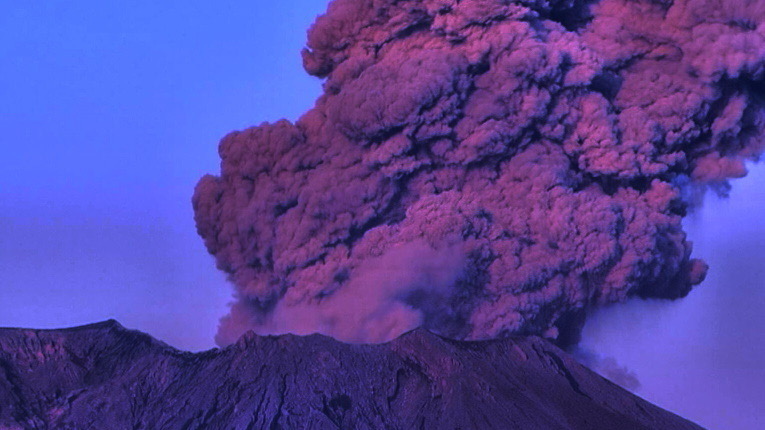
Volcano-related research
High-accuracy characterization of deformation associated with eruptive activity; estimation of magma sources and processes; high-precision characterization of volcanic plume phenomena.
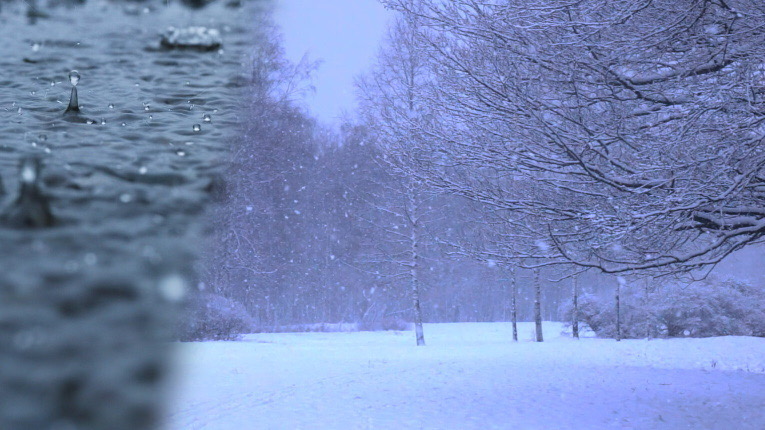
Troposphere-related research
Understanding water vapor fluctuations and clarifying the formation mechanisms of heavy rainfall and snowfall based on tropospheric delay estimation.

Ionosphere-related research
Investigation of links between ionospheric disturbances and geophysical hazards (earthquakes, volcanic eruptions, and tsunamis).

SAR atmospheric/noise corrections-related research
Efficient mitigation of tropospheric and other noise components in SAR images to improve crustal deformation monitoring.